Helicopters:
| Type | 2 x BK117 - C1 |
| Manufacturer | Bölkow Kawasaki |
| Engines | 2 x Arriel 1E2 engines, 700PS each |
| Maximum take-off weight | 3350 kg |
| Number of passengers | max. 5 |
| Speed | 125 nm/h (225km/h) |
| Range | 240nm (430km) ; 278 l/h fuel consumption |
| Operating range around the ship | max. 80nm (= abt.17h rescuetime by Polarstern in icecovered waters) |
| Staff | 2 pilots; 2 technicians |
| Tasks | emergency, ice reconnaissance, scientific services, transport |
Helicopter BK117 - Polarstern
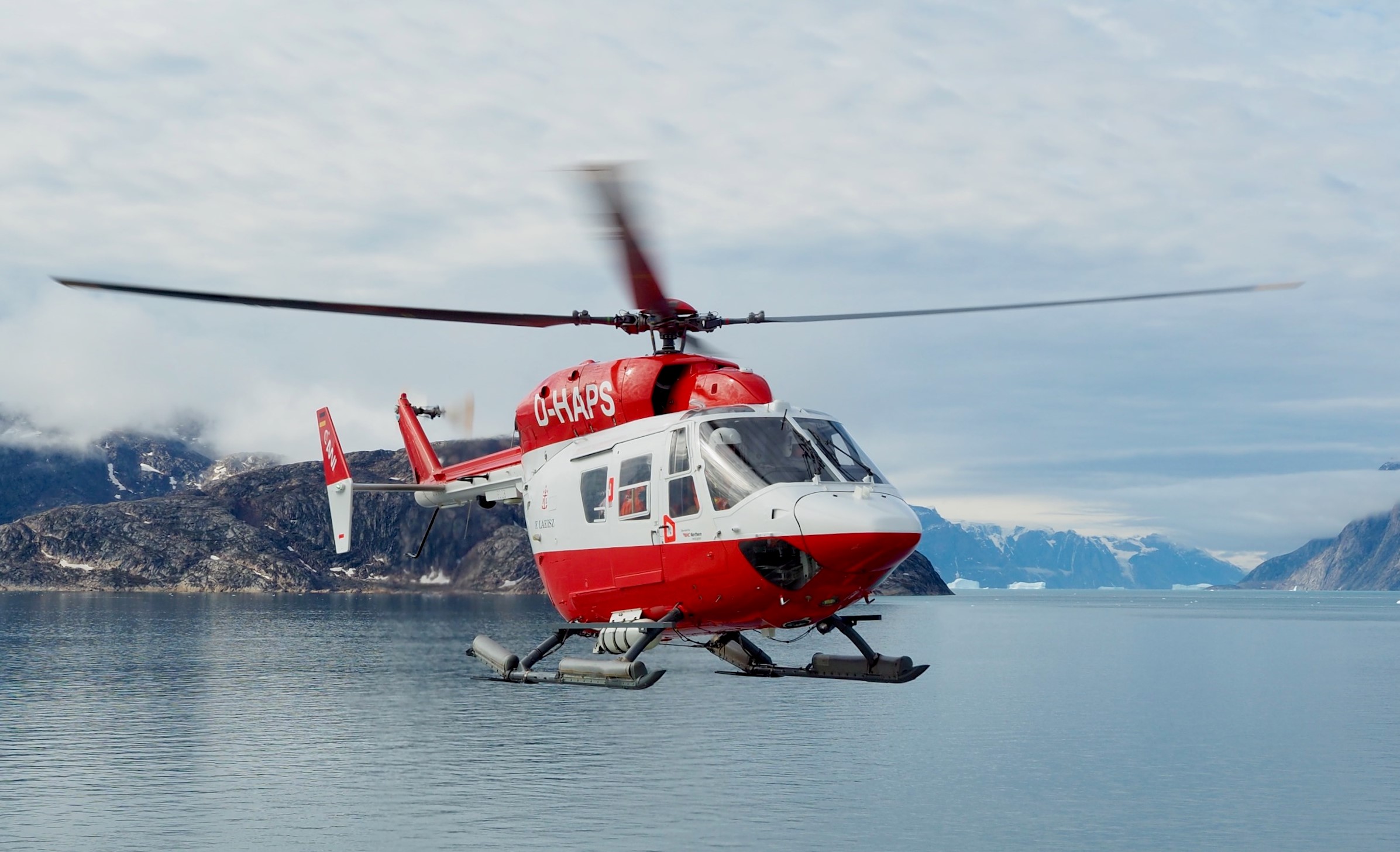
(Photo Northern Helicopter)
Helicopters are provided by the shipping company F. Laeisz and operated by Northern Helicopter in Emden, Germany.
The German aviation law for offshore flying is applied. Supervisory authority is the Federal Aviation Office (LBA-Luftfahrtbundesamt) which implements the EU law of the European Aviation Safety Agency (EASA).
Helicopter operations onboard (daylight conditions)
- A so called "STASS" or "CA-EBS" - briefing is required for all helicopter passengers and can be carried out on board. (CA-EBS = Compressed Air-Emergency Breathing System; STASS = Short Term Air Supply System). An instruction can be given by the pilots on board for persons that are occasionally flying, but this is not the same as a training ashore and the heli operator assumes no liability for this on board training.
Halfday STASS trainings can be completed at commercial training centres. Frequent flyer are strongly recommended to take part in a full "Helicopter Underwater Escape Training" (HUET) before the expedition. Commercial companies offer courses. Please register yourself for any suitable training course on your own costs. (AWI-Logistics does not organize or pay for courses)
To take part in a training course mentioned above you will have to prove your medical fitness by presenting a medical certificate for offshore duties. Information on how to receive such a certificate can be found here: Medical Examination
A survival package is taken along for each person and a group survival equipment bag for 9 persons. The equipment is present onboard.
The equipment is weight-optimized and planned for an absence of max. 17h. (max. rescue time). There is no food in the equipment and the fuel bottle for the cooker must be filled on board !- Helmets must be worn in the helicopter for safety reasons at all times. Immersion suites with a self-inflatable life vest are obligatory during flights. The equipment is available onboard.
- One helicopter stays onboard or in the close vincinity of the ship ( < 3 nm) for safety reasons, while the other is in use.
- The used helicopter is flown by one pilot, the other pilot is at the "Tower" onboard.
- 5 passengers can come along plus the pilot because all 6 persons must be rescued in case of emergency. (Pilot+Doc. + 6 persons of helicopter 1 ==> 8 persons in the rescue helicopter)
- Rescue of all persons on the ice has to be possible with only one helicopter flight so that no one stays behind in case of e.g. a weather deterioration, helicopter crash, break-up of ice floes or polar bear attack. Only one group will be allowed in the field at the same time due to the above mentioned reasons.
- It must always be expected that the group can not be collected in time because of weather conditions. The position of the working area has to be chosen thus that rescue by the ship or other means is possible in an acceptable time.
- Stand-by of a helicopter on site is about 45 minutes. If longer stays are required the helicopter flys back to the ship and collects the group later. In this case the group must be equipped with GPS and Iridium telephone. There are 2 Iridium telephones available onboard from the communication electronics engineer.
- Operation below -30°C air temperature is limited, below -45°C prohibited
There will be a meeting of chief scientist, captain, pilot and meteorologist before every flight for discussing the flight plan. The flight programme must be documented in writing. The decision if flying is possible or not has to be unanimous. The pilot always has the final word .
The pilot can always abort the operation. His/her decision is mandatory and must be followed immediately.
- If only one helicopter is operational for technical reasons, the other helicopter may operate within 10 NM of the ship only. Thus, in case of emergency, rescue measures can be undertaken from the ship in due time.
- It might be that the helicopter operator needs to obtain permissions for take-off and landing before the expedition through local air administrations. Therefore you should announce your flight plans to the chief scientist at an early stage.
Examples for load and range:
| Persons (95kg each) | Load (kg) | Range |
|---|---|---|
| 1 pilot + 2 scien. | 300 | 80 |
| 1 pilot + 2 scien. | 500 | 60 |
| 1 pilot + 2 scien. | 600 | 30 |
| 1 pilot + 4 scien. | 100 | 95 |
| 1 pilot + 4 scien. | 300 | 60 |
| 1 pilot + 4 scien. | 400 | 30 |
| External load (kg) | Range (nm) |
|---|---|
| 1000 | max. 15 |
| 950 | max. 30 |
| 850 | max. 50 |
Ask the pilots on board about the payloads and external loads of your specific flight operations.
Overview helicopter operations
(M. Hirsekorn)
Flight limitations (Northern Helicopter)
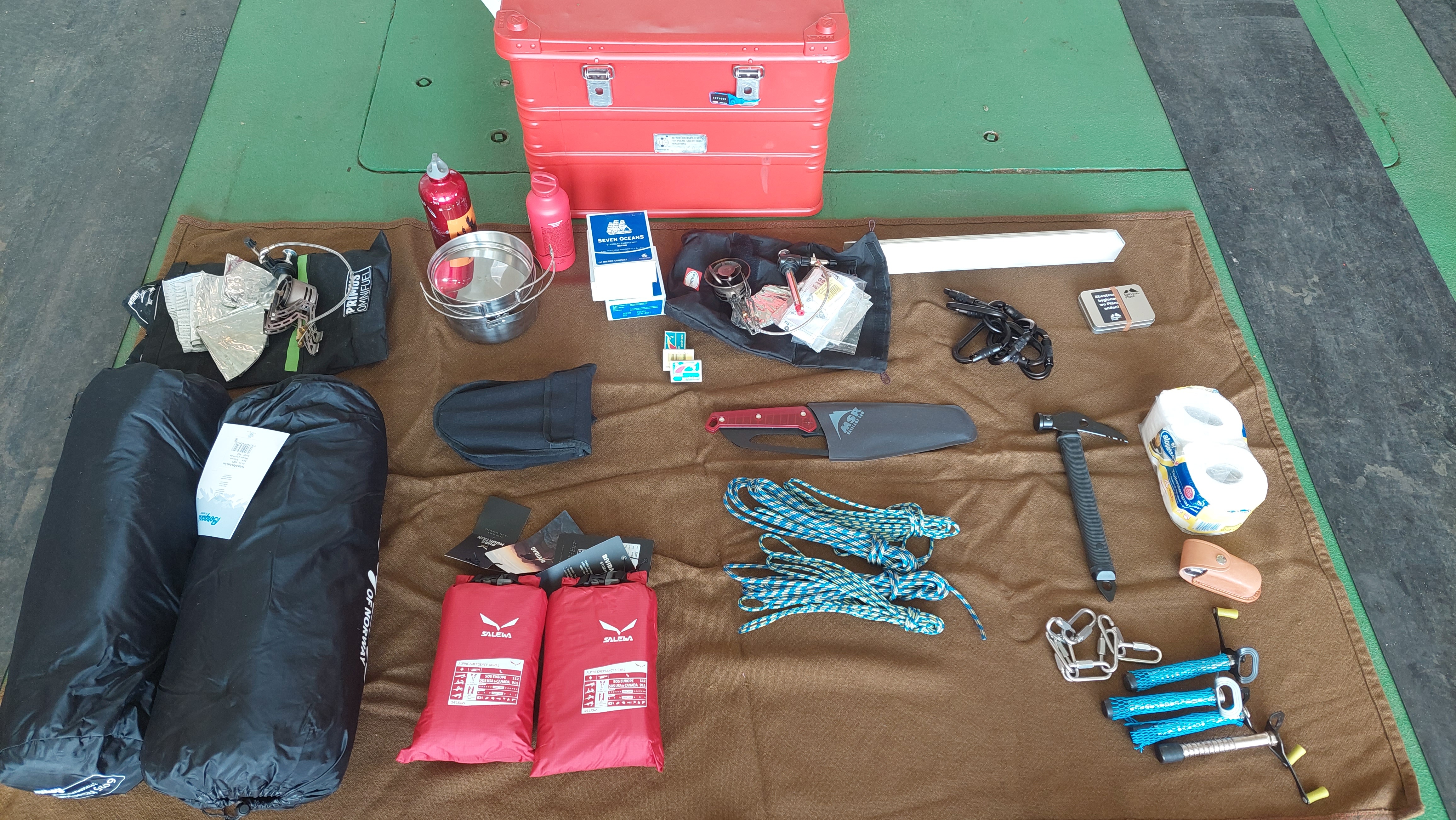
picture of group survival equipment (Northern Helicopter)
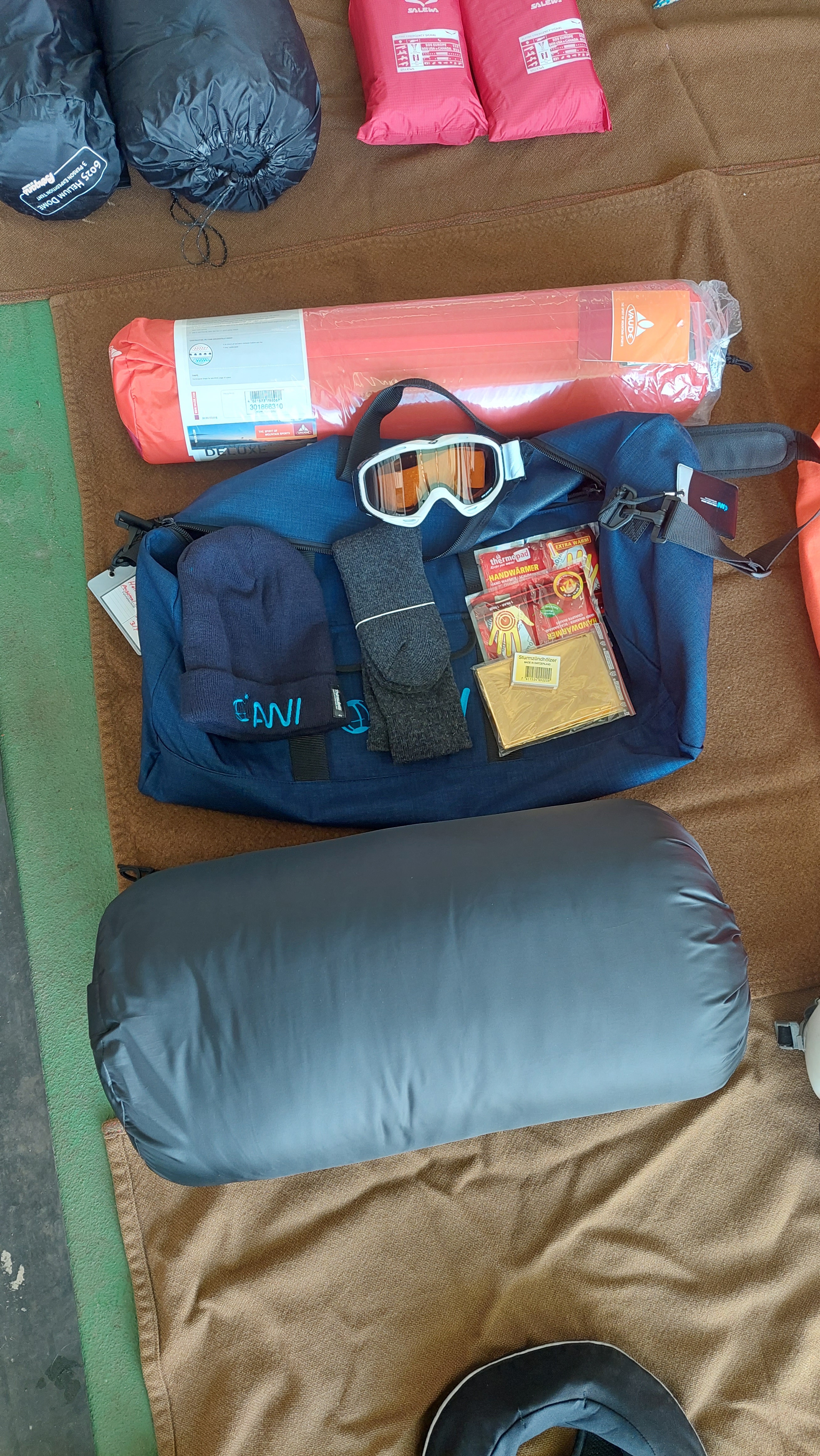
picture of personal survival equipment (Northern Helicopter)
immersion suit (Northern Helicopter)
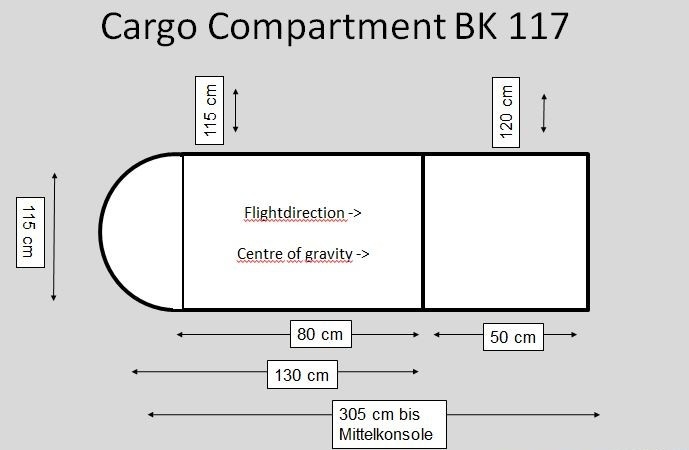
Size of Cargo Compartment BK117 (Northern Helicopter)
Check list CA-EBS Training (Windguard)
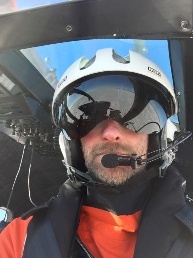
Helmet (Pict.:M.Hirsekorn)
